Sunday, May 18, 2014

Pho Vietnam Restaurant


Corner Brook is a city on the West Coast of Newfoundland which is home to the Krueger paper mill, Memorial University's Grenfell Campus and close by to the Marble Mountain Ski Resort.  It is also a very special place to me, because it is where I was born and spent my early childhood years.


Corner Brook is also home to some great restaurants, some that you wouldn't expect to find in a smaller city in Newfoundland, but would see in larger centre like Vancouver or Toronto.   One such restaurant is the Pho Vietnam Restaurant, a charming little Vietnamese restaurant next to Coleman's Grocery store.  The space is small, but warm and welcoming with some Chinese and Vietnamese decorations adorning the walls.  The restaurant is always busy and full, but the owner always makes sure to welcome and seat the customers as soon as possible.


One evening we decided to try Pho Vietnam and ordered Vietnamese style crispy spring rolls and vegetarian cold noodle rolls for appetizers.  The vegetarian cold rolls were one of the freshest and tastiest I have had in a long time, especially in Newfoundland.  The taste was delicate with the sweet cool cucumber as the main flavour.  The peanut sauce dip was very tasty, but not too overpowering.  The crispy spring rolls were very flavourful with a savoury sweet sauce. 
Vegetarian Cold rolls with a peanut sauce

Crispy Spring Rolls

For the main, we ordered seafood hotpot and beef ball pho.  Pho (pronounced like "fuuuh") is one of the most popular dishes from Vietnam, consisting of flat noodles, meat and a light broth.  The pho was savoury but not salty.  Since I am a fan of spicy food, I added some sriracha sauce and some other spicy condiments to the soup, it was delicious.  This however was not needed because it was flavourful on its own. 
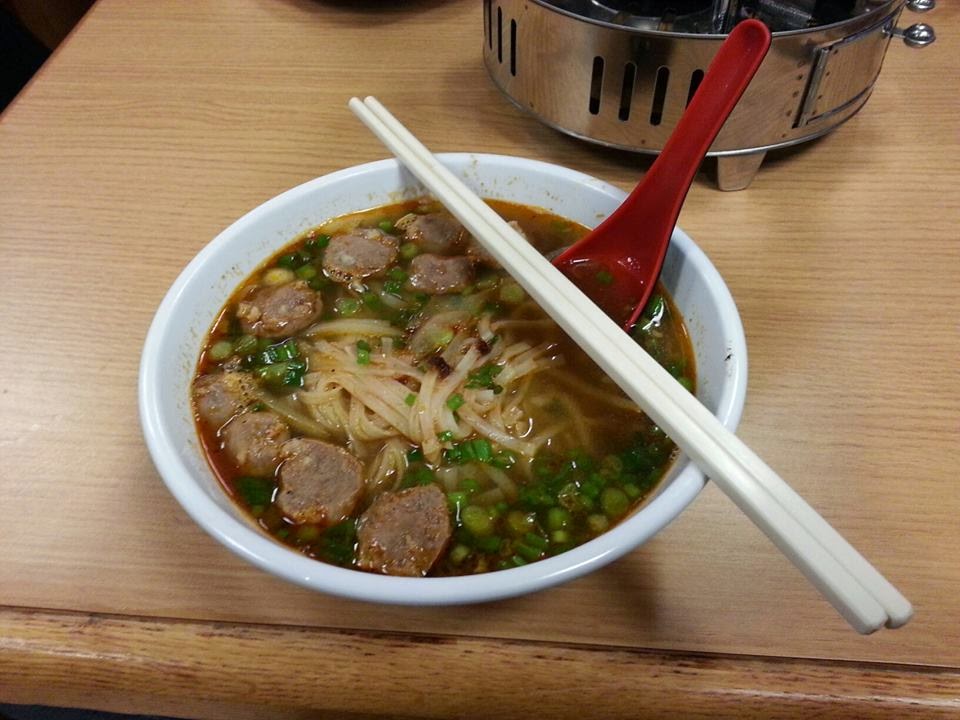
Beef ball Pho

The hotpot was very interesting.  The owner brought out a pot of hot soup broth laid on a portable burner which used a gel sterno.  She also brought out a plate of cold rice noodles, a plate with an array of seafood and a plate loaded with vegetables.  The hotpot was a little different than the hotpot we have at home because we were given a ladle instead of the individual scoops.  We tossed all the ingredients in the pot and ate it in our bowls like a soup.  It is not quite like hotpot at home, but it worked well for us, and was very tasty.  It was also very filling, as there were 3 of us and it serves 4-6.
Seafood Hotpot

The price is very reasonable, at about $20-25 per diner for appetizer and main (depending on the item)

The owner, Cathy Nguyen is very personable and makes sure her customers have a great dining experience.  She has become friends with all of her customers who instantly become regulars.  She chatted with us after our meal and told us about her native country, Vietnam.   I will definitely visit Cathy and Pho Vietnam Restaurant when I return to Corner Brook.

Tuesday, March 4, 2014

Pancake Tuesday

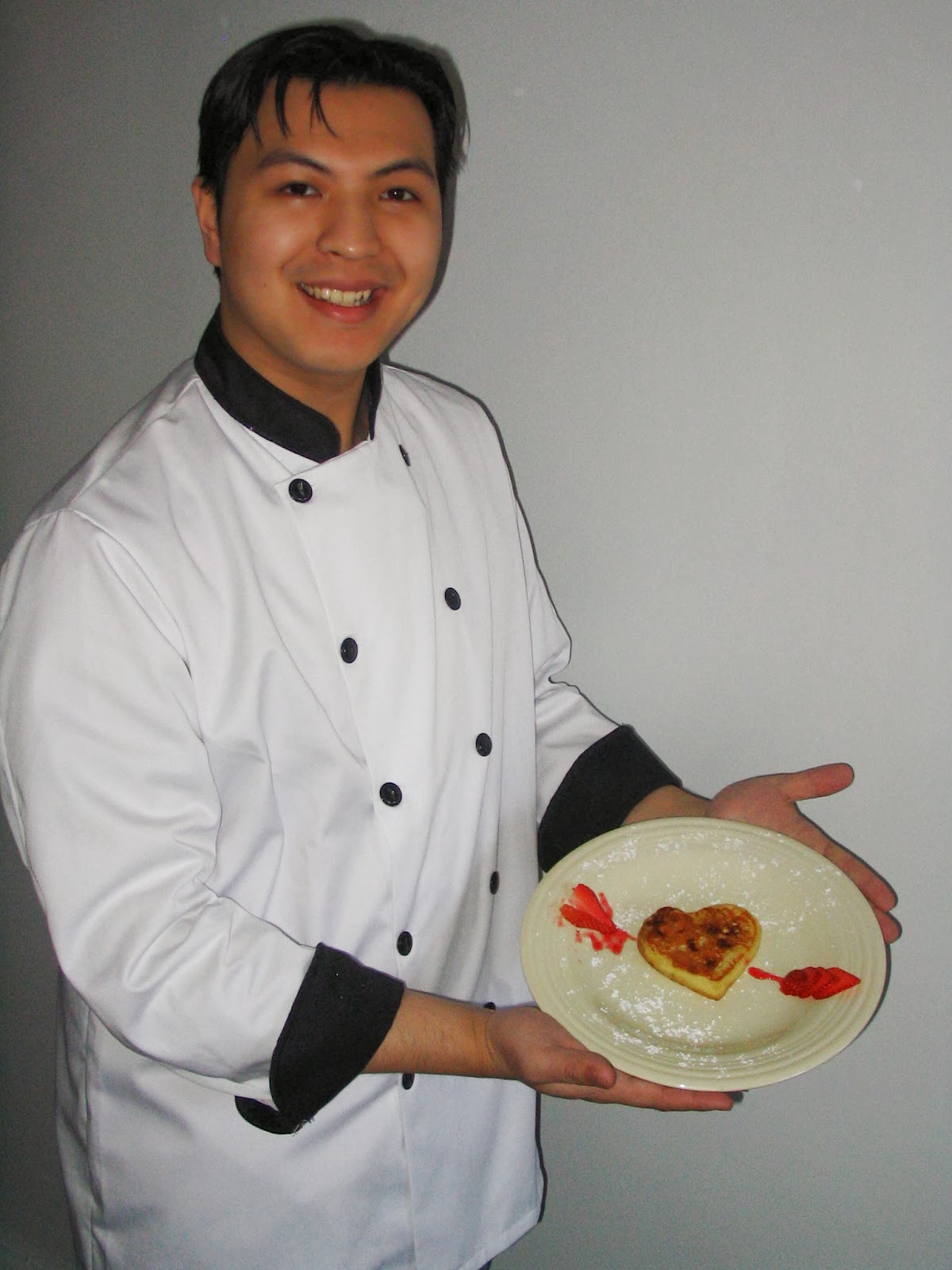
cookie cutter shape, jacket and jazz hands optional


Happy Pancake Day!!

Spring is in the air, well not really, it is still cold and snowy, but the first sign of spring is upon us.  It is pancake Tuesday also called Shrove Tuesday or Mardi Gras.  Shrove Tuesday is the last day before Lent begins, which is a holy season for Christians that starts on Ash Wednesday and ends around Easter.  In historical times, Lent was a time for fasting and prayer and so to prepare for the fast of lent, households would take the day before to use up the indulgent ingredients they had in their pantries. 

Pancakes are associated with Shrove Tuesday as forbidden "indulgent" food items included butter, milk, eggs, dairy and sugar, which are common ingredients in pancakes.  I heard a story on the radio once that said that in ancient times, unrisen cakes similar to pancakes were eaten as treats and were forbidden during the fast of lent, so people made them up the day before with their left over ingredients to enjoy.

In 2006, American franchise IHOP began celebrating Shrove Tuesday as "National Pancake Day" as a fundraiser for various causes.

In Newfoundland, where I was born and raised, there is a special custom involving pancakes on pancake Tuesday.  Parents would put certain items (washed and wrapped in tinfoil) into the pancakes, which had different meanings for the kids opening them. 

finding:

a penny meant they would grow up to be poor
a quarter meant they would grow up to be rich
a ring meant they would get married
a button meant they would not marry (bachelor's button)
a nail meant they would become a carpenter (or marry one)
a string meant they would become a fisherman (or marry one)
a thimble meant they would become a tailor or seamstress


My wife recalled that as a child, they would try to feel the pancakes before taking them as to try to get the quarter pancake and her parents eventually just put money in all of the pancakes, but it took away the fun and mystery of the different items.

 As parents ourselves, we will continue the item in the pancake tradition in the future, but since our son is under two we will stick to plain pancakes.  Here is a recipe for homemade pancakes.  Happy Pancake Day!


Old fashioned pancakes

Ingredients:

1 C flour                                  1 C milk

1 tbsp sugar                           1 egg

1tsp baking powder             2 Tbsp vegetable oil               

1/2 tsp baking soda             1 tsp vanilla extract

1/4 tsp salt                            1/2 C chocolate chips (optional)


Method:

Preheat lightly oiled pan over medium heat

In a bowl, mix dry ingredients and make a well in the centre of the ingredients.

In a separate bowl, mix wet ingredients.

Add wet ingredients into the well of dry ingredients and whish until smooth.

Pour batter into hot pan, using about 1/4 cup of batter per pancake. Cook pancake until slightly browned on both sides (pancake should be ready to flip when bubbles start to form on the surface of the uncooked side).


Thursday, February 13, 2014

Valentine's Day Desserts

Happy Valentine's Day!

Tonight is the night when we celebrate love and romance.  Because it is also a Friday, the popular date spots will be very busy.  Perhaps some of you are going out to dinner, to the movies or bringing flowers and candy to your loved ones.  Perhaps you want to skip the lines and bustle and enjoy a quiet romantic evening at home.

When I celebrate Valentine's day, that is what I like to do best.  Enjoy a quiet evening at home with my wife.   We pack our son off to Grandma's, light candles, pour the wine and cook a nice meal together.  Cooking at home is great because we know we will get our meals the way we like.  This year, I picked up some avocadoes for a pureed avocado soup,  beef tenderloin, mixed red and white baby potatoes, asparagus and peppers for the main, and homemade vanilla bean creme brulee and red wine poached pear for dessert. 

To celebrate the occasion, here is the recipe for vanilla bean creme brulee and poached pear for you to enjoy and perhaps make as part of a meal you cook for your sweetheart!


Vanilla Bean Creme Brulee

Makes: 8 servings


 Ingredients:

 
    4 cups                               Heavy Cream
    1/2 pod                              Vanilla bean, scraped
    8                                        Egg yolks
    3/4 cup                              Sugar
    8 Tablespoons                  Sugar for topping


Directions:

 
Preheat the oven to 300F.  In a heavy medium saucepan, combine the cream and vanilla pod and warm over moderate heat until the surface begins to shimmer, about 5 minutes. 
 
In a large bowl, stir the egg yolks and sugar until blended. Pour in the hot cream slowly and stir gently to avoid forming air bubbles. Strain the custard into a large measuring glass and skim off and surface air bubbles. 
 
Place 8 3/4-cup ramekins in a roasting pan.  Pour the custard into the ramekins, filling them up to the rim.  Place the roasting pan in the oven and pour in enough warm water to reach halfway up the sides of the ramekins. 
 
Cover loosely with foil and bake for 1 hour or until the custard is firm around the edges.  (It may still be wobbly in the center but it will firm up as it chills.) Remove the ramekins from the water bath and let cool. 
 
Cover and refrigerate until cold, at least 3 hours.  (The custards can be prepared to this point up to 2 days ahead.  If small pools of liquid develop on the surfaces, blot with a paper towel before proceeding.)
 
Preheat the broiler or a salamander.  Set the ramekins on a baking sheet.  Sieve 1 tablespoon of brown sugar over the top of each custard in a thin layer. Broil the custards as close to the heat as possible until the sugar is caramelized, 30 seconds to 2 minutes; watch carefully.  Let cool and serve immediately or refrigerate for up to 2 hours.


Poached Pear in Red Wine Reduction

Makes: 6 servings

Ingredients:

3 Bartlett pears (Medium ripeness)

1 tsp butter

 1 cup Merlot

1/2 cup sugar

1 tsp vanilla extract

Directions:

Slice pears in 1/2 and core them.  In a medium saucepan, melt butter, and heat until it starts to brown. Add sliced pears face down until they start to caramelize. Turn over once caramelized. Add the merlot to deglaze the pears.  Then add the sugar and reduce until pears are cooked and sauce has thickened.  When pears are cooked through, stir in vanilla.  Serve and enjoy.

Thursday, January 30, 2014

Dumplings for Chinese New Year

 
Gung Hey Fat Choy!

Ask a Chinese person what their favourite Chinese holiday is and the answer is always Chinese New Year.  There are many reasons for loving this holiday.  The young and unmarried are given red packets containing money (called lai sees or hong baos) from their elders, families travel long distance and reunite and there is lots and lots of celebrating, parties and food.

There are many special foods eaten made and served during Chinese New Year, with the biggest feast falling on New Year's Day.  During the 15 day holiday there are many different gatherings and dinners, the first falling on New Year's eve.

Families often gather on New Year's eve, watching the New Year's Gala on television, making dumplings.  At midnight, the dumplings are eaten and shared. 

To read about the legend behind dumplings, see http://chineseculture.about.com/library/weekly/aa011900a.htm

This year, Chinese New Year falls on January 31st and it is year of the wooden horse. 

So, in honor of Chinese New Year's Eve, let's make some Chinese dumplings, or Jiao zi or Gow Gee.

Jiao Zi

Dumpling dough:

1 cup boiling water

2 cups flour

1 tsp chicken broth powder (optional)

2 tsp sesame oil

1 tsp salt

-In a bowl, mix the flour, chicken broth powder and salt.  Add the boiling water and mix into a soft dough.  Add in the sesame oil.  Knead until smooth.  Form into a ball and leave into the bowl.

-let dough rest for 20-30 mins, covered with a damp cloth.


Dumpling filling:

1 pk ground pork

finely shredded napa (Chinese lettuce), about a cup

1 tsp chicken broth powder

1 tsp garlic powder

1 tsp onion powder

1 tbsp sesame oil

1/4 C finely chopped green onions


- In a bowl, mix the ingredients until thoroughly combined.


To form the dumplings:

Divide the dough in half. Shape each half into a roll 12 inches long and cut each roll into 1/2-inch slices.

Roll 1 slice of dough into a 3-inch circle and place 1 tablespoon pork mixture in the center of the circle. Lift up the edges of the circle and pinch 5 pleats up to create a pouch to encase the mixture. Pinch the top together. Repeat with the remaining slices of dough and filling.


Place dumplings in a steamer, making sure they are not touching, and steam for 12-14 minutes.  The dumplings may also be boiled.


When dumplings are cooked, you may pan fry them with about 1 tbsp oil in a hot pan or wok until crispy.


Sauce:

For a simple traditional sauce, add 1tsp sesame oil to 1/4 C soya sauce.

 
Enjoy!

Wednesday, October 30, 2013

Pumpkin carving


My son and his 1st pumpkin 2012
 

Winnie the Pooh pumpkin lit up


Halloween is once again upon us!

In St. John's this year, pumpkins have sold out early, and are quite in demand.  In the past few days, radio stations have offered pumpkins as prizes in contests.  Hopefully you have your pumpkins.  Here are some little facts about pumpkins.

1) Pumpkins are considered botanically to be fruit because the pumpkin itself is the only seed bearing part of the plant, which comes from the flower.

2) Pumpkins belong to the squash family.

3) Pumpkin seeds are a good source of zinc, copper, magnesium and protein.

4) Pumpkin is full of fibre and can be eaten to help alleviate digestive issues such as constipation and diarrhea.

5) If you carve a pumpkin, it can be preserved for a few days longer by rubbing petroleum jelly over the exposed flesh.

6) Carving a pumpkin is similar to watermelon carving; you can trace any pattern or image onto a pumpkin and etch it out using Thai carving knives or an exacto knife.  You do not have to cut all the way through in order to have light shine through from the inside.  For step by step instructions on how to carve watermelon (or use the same technique for pumpkin) please see my blog entry on watermelon carving. 

Happy Halloween!!

Doraemon pumpkin carved, 2013

Doraemon pumpkin lit up

My wife is a huge fan of the Japanese cartoon Doraemon!

Monday, October 7, 2013

Kalakand (milk burfi)


I have a recent request to make an Asian dessert, and so I decided to make Kalakand, an Indian sweet which is similar to burfi.  Burfi is one of my mother in law's favorite desserts, introduced to her by close friends from Delhi years ago and so I decided to try it out and give some to her as a treat.

 Kalakand, like burfi is made from mostly from milk solids and sugar.  The difference is in the way the milk solids are taken from the milk.  In Kalakand, the fats in whole milk are solidified using lemon or lime juice, making a basic cheese (paneer).  In burfi, the fats in whole milk are solidified by boiling the milk for a long time, reducing the liquid until only the solids are left (khoya).

I thought for trying it out the first time, the best method to get milk solids was through curdling the milk, since it was less time consuming and easier to achieve.  It is so similar, that in many recipes online, it is used interchangeably with burfi, so why not make kalakand?


Ingredients

1 litre of whole milk

3-4 tbsp fresh lemon juice

4 tbsp whole milk powder

6 tbsp powdered sugar

1/4 tsp cardamom powder

2-3 tbsp ghee (clarified butter is fine)

1 tbsp chopped pistachios *optional*


*this recipe yields very little (about 3"X3"  and about 3/4" thick), so if you want a 9" pan of Kalakand, it is best to quadruple the recipe, to make sure there is enough.


Method:

In a heavy bottom pan, stirring constantly, simmer 1 litre of whole milk.
 

As the milk is coming to a simmer, slowly add the lemon juice to curdle the milk.

When the milk is separated, strain the solids through a mesh sieve.  Let drain for 3 hrs.  The solids are now called paneer.


Put the paneer into a bowl and add the powdered whole milk and sugar and knead into a dough.

In a pan heat the ghee and add the paneer mixture.
 

Stir fry on low heat until ghee separates, remove from heat.

Add cardamom powder, mix and allow to cool a bit.

When cooled a bit, press into pan.

Press chopped pistachios onto the top of the kalakand *optional*

Wait 1-2 hrs to allow to cool completely.
 
Cut into squares and enjoy


This is a very rich and tasty dessert often served at Indian celebrations.  It comes in many colors, flavours and styles, including being decorated with real edible silver foil.


Monday, September 30, 2013

Chinese Hot Pot 火鍋


Happy autumn!

In my neck of the woods, autumn brings beautiful fall colors of the changing leaves, an abundance of delicous harvest vegetables and goodies and cooler crisp weather.  As the weather cools, I like to warm up by enjoying one if my favorite Chinese meals;   (foh wo; literally meaning fire pot) also known as hot pot, dah bin low, Chinese fondue, or steamboat.

Hot Pot is very popular in China, HK and other places where there are Asian people.  In bigger cities in Canada, like Toronto or Vancouver, there are many hot pot restaurants with burners built into the dinner tables.  Customers pick the ingredients they want and the waiters bring them the ingredients, the pot with broth and hot water to top up the pots.
A hot pot meal prepared by my godmother
photo credit: Leo and Mel
 

This type of Chinese meal has been around for over a thousand years.  My father once told me that hot pot came from an ancient village in Northern China where the peasants were very poor and had little food, but wanted to have a gathering.  The villagers brought what little they had.  Somebody brought a pot, another brought a fish they had caught, cut up to share, another brought a few vegetables from their meager garden, and so on.  When combined, the villagers had plenty of food and from then on hot pot became popular.

There are different stories about the origin of hot pot and there are many different combinations of ingredients that can go into hot pot.  You could even add your own twist on it.  My wife adds tortellini to her hot pot and while it's not traditionally Chinese, it actually tastes pretty good in it.

Here are some common ingredients for hot pot:

shrimp                  thinly sliced beef              udon noodles                    wonton noodles

crab                       thinly sliced lamb             nappa                                   dumplings

fish balls               cubed tofu                          bok choy                              beef balls


Tip:

If you are using a gas or coal fired stove, make sure to have adequate ventilation, including opening the window as the stove will eat up oxygen.


If you are using ground beef, or thick raw meat ingredients like dumplings, it is best to boil the meatballs/dumplings beforehand to ensure they are properly cooked, and to also reduce cooking time while in the hot pot.  Thinly sliced meats such as beef or lamb are okay to put into the pot raw, as they will cook rapidly.


Enjoy!